
h20 timber beams sales
As global construction demands faster cycles, higher quality, and sustainable practices, the H20 timber beam remains a cornerstone of intelligent formwork design. Now widely available for international sale, it offers contractors a reliable, economical, and eco-conscious solution for concrete support.
2/24/20263 min read
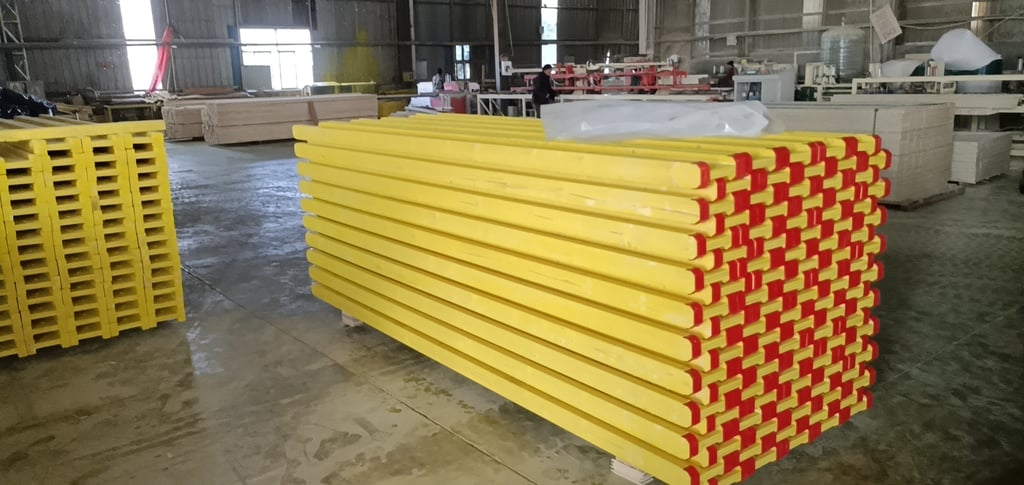
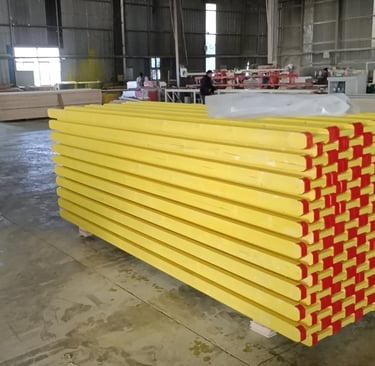
H20 Timber Beams for Sale – The Engineered Backbone of Modern Formwork Systems
In the world of concrete construction, efficiency, precision, and reliability begin long before the first pour—they start with the right support system. Among the most trusted components in slab and wall formwork across Europe, the Middle East, Asia, and beyond is the H20 timber beam. As a standardized engineered wood product, the H20 has become the de facto primary or secondary beam in countless formwork setups—from residential housing to large-scale infrastructure. Today, high-quality H20 beams are available for global sale, offering contractors a proven balance of strength, reusability, and cost-effectiveness.
What Is an H20 Timber Beam?
The “H20” designation refers to a specific type of engineered I-beam made from laminated softwood flanges and a plywood web, conforming to European standards such as DIN 1052 and EN 14080. The name derives from its nominal height of 200 mm, with standard flange widths of 90 mm and a web thickness of 27 mm. Available in lengths from 1.0 m to 6.0 m (and extendable via splice connectors), H20 beams are designed to carry heavy uniform and point loads while maintaining minimal deflection—typically within L/400 under service conditions.
Unlike solid timber, which can warp, split, or vary in strength, H20 beams are factory-engineered for consistent mechanical performance, making them ideal for repetitive use in table forms, slab supports, and wall walers.
Why Contractors Choose H20 Beams
High Load Capacity: With a bending strength exceeding 28 N/mm² and a modulus of elasticity around 11,000 N/mm², H20 beams safely support wet concrete loads in multi-story constructions.
Reusability: When handled and stored properly, H20 beams can be reused 200 to 400 times, drastically reducing material waste and long-term costs compared to single-use lumber.
Compatibility: H20 beams integrate seamlessly with major formwork systems—including those from Doka, PERI, ULMA, and local modular solutions—thanks to standardized dimensions and connection points.
Smooth Concrete Finish: Their rigid structure prevents sagging, ensuring flat, level slabs that often require no additional screeding or grinding.
Sustainability: Made from renewable softwood (often FSC® or PEFC™ certified) and bonded with waterproof adhesives, H20 beams support green building practices while minimizing deforestation impact.
Global Availability and Sales Options
Today, H20 timber beams are manufactured not only in Europe but also in China, Turkey, and Southeast Asia—offering competitive pricing without compromising on quality. Reputable suppliers provide beams that meet CE marking requirements and include full Declaration of Performance (DoP) documentation for compliance in EU and international projects.
For buyers, purchasing options include:
Standard lengths (e.g., 3m, 4m, 5m, 6m) in bulk bundles (typically 10 pieces per strap).
Custom lengths or pre-cut kits for specific project layouts.
Splice connectors for creating beams longer than 6 meters.
FSC-certified or fire-retardant treated variants upon request.
Pricing typically ranges from $8 to $14 per linear meter, depending on volume, certification, and shipping terms (FOB, EXW, or DDP). For large EPC contractors or formwork rental companies, annual supply agreements ensure consistent inventory and preferential rates.
Proper Handling and Storage Extend Service Life
To maximize reusability, H20 beams should be:
Stored horizontally on level bearers, off the ground.
Kept under cover to avoid prolonged UV exposure and rain absorption.
Inspected before each use for delamination, flange damage, or web cracks.
Never drilled unnecessarily in the web area, as this compromises structural integrity.
With proper care, these beams deliver exceptional ROI—far outperforming solid timber in both performance and lifecycle economics.
Applications Across the Construction Sector
H20 beams are versatile and widely used in:
Residential high-rises: As primary beams in table form systems for floor slabs.
Commercial complexes: Supporting waffle slabs or flat plates.
Industrial facilities: In heavy-duty flooring for warehouses and factories.
Infrastructure: For bridge deck formwork and tunnel lining supports.
Their adaptability makes them a staple in both cast-in-place and semi-precast methodologies.
Why Source H20 Beams from Trusted Suppliers?
Not all H20 beams are created equal. Low-cost alternatives may use inferior plywood, non-compliant glue, or inconsistent lamination—leading to premature failure. Buyers should verify:
Compliance with EN 14080 or equivalent standards.
Third-party test reports (e.g., from SGS or TÜV).
Moisture content below 15% at dispatch.
Clear labeling of manufacturer and batch number.
Reputable suppliers also offer technical support, load tables, and BIM files to assist in formwork design.
Conclusion: A Proven Investment in Efficiency
As global construction demands faster cycles, higher quality, and sustainable practices, the H20 timber beam remains a cornerstone of intelligent formwork design. Now widely available for international sale, it offers contractors a reliable, economical, and eco-conscious solution for concrete support.
Whether you’re outfitting a new formwork fleet or replenishing inventory, investing in certified H20 beams means investing in safety, speed, and structural integrity—one pour at a time.